Moving Forward

As we move forward into 2026, I am feeling optimistic despite the many troubling events unfolding around us. I have always been inclined to see the glass as half full, a disposition which offers those who share it a small but valuable head start. In much the same way that we will soon see buds of new growth appearing on trees and beneath our feet as the natural world awakens, some people will find it harder than others to throw off their winter shackles.

Old friends of mine — we go back many years — are deeply aware and marvellously in tune with what is happening around them. Glen and Cameron Broughton have devoted their lives to guiding people to places of special interest and importance. Their quiet presence and deep knowledge lead not merely to surface understanding, but to something that reaches much deeper.

Through their regular letters and tour information, they share these insights, and their most recent letter captured something essential about this moment in our history. I am therefore including it here:

LIVING WITH EXTREMES
by Cameron Broughton

’As we arrive at the shortest day of the year, like a pendulum we find ourselves at the outer edges, and at this time quietly awaiting the return of the light.

We know that our natural world will return to balance as we begin the journey towards Spring. It is the cycles of the wheel of the year that teach us that extremes will always fall back into balance. We can have faith that whatever turbulent times we’re in, personally and globally, will be remedied. The same is true for the extreme highs, they can’t last forever; the ultimate natural world order is to return back to balance.

Since Samhain (Halloween) we have had the opportunity to go inwards, to reflect on our year past, to acknowledge what has worked for us and what hasn’t and have begun to dream of the seeds that we want to plant for a nurturing year ahead.

For extremes, taking stock is all about the acknowledging the pendulums of life; success/failure, right actions/wrong actions, joy/sorrow, etc. There are no mistakes only opportunities to learn and grow from. In this process, we can bring ourselves back into harmony by allowing the natural flow between our extremes.

If you believe that we are one with each other and our planet, know that our personal actions have an effect on us all. In the turbulent times that we are living in, may our vision adapt to the big picture, allowing us the opportunity to forgive and be forgiven. We can be the creators of harmony in the world.

May the blessings of the Universe shower down upon you and May the blessings of the Earth support your every step.’

Stillness…
“Outside the snow is falling, Christmas lights are twinkling and the stillness is palpable. It reminds me of the poem, “Stopping by Woods on a Snowy Evening” by Robert Frost, where the narrator is drawn in by the beauty and allure of nature, yet remembering the responsibilities of life and pulled between the two…

I think many of us find ourselves in this dilemma often and finding the balance can sometimes seem unattainable. Glenn and I have shared this in many of our writings; it is the natural world that ultimately brings us back into balance. As the height of our celebrations have come and gone, we’re grateful for this quiet moment. We hope that your holiday celebrations have brought you joy and that you too can find a quiet time to reflect and be at peace.”

I was reflecting on how fortunate I have been, as thoughts came tumbling into my mind one after another.Memories unfolded into adventures lived and into the many remarkable people I have had the pleasure and privilege of meeting.

Learning — and being guided by others — has played an enormous part in my journey,and I recognise how often I have stood on the shoulders of giants.

Acknowledging this does not mean that I am bowing out, merely that I am recognising the richness of the life I have lived within these circles, and the value of this ongoing education in what might be called the School of Life.

At present, I am planning a single tour on 31 July. Maria Wheatley has kindly agreed to lead us on one of her remarkable tours in and around Avebury during the morning. We will share lunch before visiting another extraordinary site — perhaps a new crop circle, or perhaps something equally unexpected — followed by an optional evening visit exploring the stones and history of Stonehenge. An opportunity not to be missed.

Maria Wheatley is a well-known and respected second-generation Master Dowser who specialises in dowsing for the geodetic system of earth energies, ley lines, and lost civilisations.

She is a Druid, and her heart lies with her Celtic past and heritage. She also has an affinity with ancient Egypt, where she discovered an incredible ley system and divine feminine earth energies at Abydos and Hathor’s temple respectively. She has dowsed in 17 different countries and coined the phrase ‘yin water’ to describe Gaia’s deep waters that emit powerful surface patterns and energy-line flows. She has recently discovered the Multiple-Geospiral energy pattern, a yin earth-energy system, and how the planets enhance these energies.

She is an international speaker who runs tours to ancient sites such as Egypt, Malta, and Ancient America. She hosts one-to-one tours and works with small or large groups. Her dowsing skills and profound understanding of Gaia’s energies make her a world leader with over 35 years of experience. Maria has studied the Neolithic, Bronze Age, and Iron Age at Oxford and Bath University (CAT degree point system) with expert archaeologists.
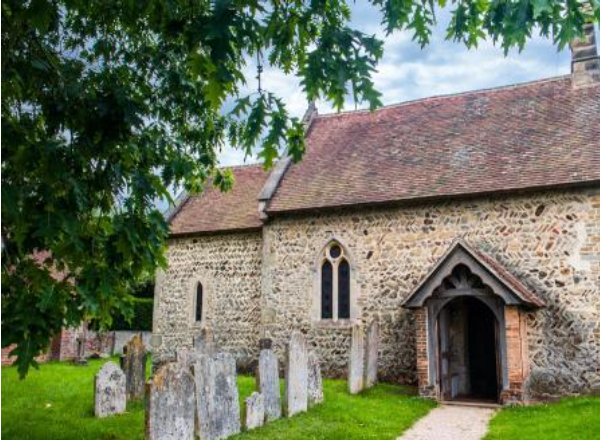
St James Church, Selham

As we go forwards, strong in heart and will, my sister and I had the joy of going to a little village church in Selham, tucked away and, at first glance, just another church.

I could not have been further from the truth. Inside, it is so small that if about 20 people are present, it feels brim-full. Early on Christmas morning, we were lucky to get a seat.

The following description, written by a nameless visitor, gives it well-deserved credit:

St James’s Church, Selham, is a lovely little country church in a beautiful setting near the River Rother. The church almost certainly dates to the late Saxon period, and there is obvious Saxon herringbone-style stonework on the outside walls of the chancel. The nave and chancel probably date to the mid-11th century or even earlier.

The highlight of Selham church is the intricately carved chancel arch; a wonderful example of Saxon architecture. The capitals on

both sides of the arch are carved with fascinating details in a mix of geometric design and strange beasts. The north capital is intriguing; it was possibly plain whenbuilt, but shortly after the Norman Conquest it was carved in a mix of Norman and Saxon styles.

The lower section shows Scandinavian style serpent creatures eating their own tails. The upper section shows a ferocious beast.

The south capital shows more obvious Saxon style, with a three- pronged tool, common in the 10th century.

The font probably dates to shortly after the Conquest and is a simple tub-shaped favoured by the Normans. One of the carvingsshows a five-pronged tool, which came into use in the Norman period, as opposed to the three-pronged Saxon tool illustrated on the chancel capital.

The south aisle is Early English in style (1190-1245), with a squint – an opening to allow those seated in the aisle to have a better view of the high altar.

We are so blessed to have so many very ancient churches still in use.

May 2026 treat you with love and kindness, and may this thought find an entrance even into the hardest heart.

With my love and best wishes,
Lucy

Glen & Cameron Broughton
Journeys With Soul
Tel: UK +44 (0)7715 525 747
Email: info@journeyswithsoul.com

Planning Ahead

With sleet and snow in the offing, it is a good time to think about making plans for warmer times. Sometimes, plans do not work out quite as we expect.

Galanthus Nivalis

Snowdrops are the heralds of spring—the first joyful signs that warmer days will soon return. When their glorious green shoots emerge, bravely pushing through the soil, you know you have survived the darkest ten weeks and that the days will now only lengthen.

Despite their diminutive size and delicate appearance, their ability to emerge through cold earth and withstand snow and frost (giving them their French name pierce-neige, “snow piercer”) speaks of a quiet strength, inviting us to recognise the same within ourselves.

Copyright Stephen Short

Though thought to have been brought to the UK around the 1500s, it is hard to imagine the landscape without them. Fully naturalised, they feel deeply embedded in our collective psyche as a symbol of hope.

In pagan belief, colours held great significance: green promoted health, while white conveyed strength. The white light of the winter sun grows stronger during the time snowdrops bloom; these flowers herald the coming of spring, bringing with them the promise of new life and nourishment.

Mythology

“The flower has a long association with the Christian festival of Candlemas and was often used to decorate churches during the celebration. This earned it the alternative name of Candlemas Bells. Greek myth connects snowdrops to Persephone’s return from the underworld. When Hades stole her away, the world fell into a dark winter. Upon her negotiated return for half the year, snowdrops were associated with her reappearance.

The plant’s rich admiration in its native lands likely prompted monks to bring them to Britain as Christianity spread. The Bible tells of Eve’s tears, upon being banished from Eden, turning into snowdrops as an angel took pity on her and Adam’s plight in the cold, barren earth.”

Copyright Stephen Short

From Monastery Gardens to Modern Medicine

Snowdrops likely began their British life in monastery herb gardens, perhaps used medicinally. Eastern European folk medicine reportedly used the bulbs to relieve pain when rubbed on the head. They also play a role in modern medicine: galantamine, used to slow cognitive decline in Alzheimer’s disease, was first extracted from snowdrops.

“In addition to their symbolic significance, snowdrops have been prized for their medicinal properties. The bulb contains compounds believed to aid in healing wounds and bruises.

Traditionally, snowdrops were used to treat headaches and as a painkiller. In modern medicine, a compound in the bulb has been used to develop a dementia treatment.”

There is a church called the Church of Our Lady at Warnford, Hampshire, which is renowned for its snowdrops. They carpet the ground all around the church, acting as a protective winter/spring blanket. The church opens to visitors every Saturday during February. I had booked to go on February 7th but, most unfortunately, was unable to go, so Church Warden Stephen Short kindly sent me the lovely selection of pictures below.

Copyright Stephen Short

“Dating mainly from the 1190s, Warnford Church, the Church of Our Lady, has an earlier tower and Saxon roots. The first church on the site may have been built by St Wilfrid in the 680s. It is known locally as the ‘Snowdrop Church’ due to the abundance of snowdrops that blanket the grounds in spring.”

The Snowdrop Church

“Deep in the woodlands of the Meon Valley, the Church of Our Lady of Warnford stands in peaceful isolation. This is hallowed ground where God has been worshipped continuously for thirteen hundred years. The church serves a scattered parish of farms and cottages, for there is no real village centre of Warnford.”

We are also told:

“A single-vessel church with no architectural division between nave and chancel, but with a wide span. Assertive west tower with big Romanesque strip-buttresses on the corners, of three stories, with Romanesque round-headed windows in the top two stages, and two circular windows at the top of the third stage. No sculpture on the tower except roll mouldings between the stories and around the windows. (The east face of the tower and the whole parapet is of brick, with an attractively cogged lower frieze.) Two inscriptions help date the fabric of the building and are likely also Romanesque in themselves. The font is also of the 12th century, but heavily mutilated.”

“Two ancient stone tablets, written in Latin, lay claim to the founding of this church by Wilfrid during his time in the Meon Valley. The people of Warnford believe that Wilfrid made his headquarters here, although the source of the claim has not been found. In any case, Adam de Port, the Lord of the Manor who lived in Warnford 500 years after Wilfrid, respected the link with the saint and rebuilt the church in stone in 1190.”

Crop Circle Tour 2026

I am delighted to tell you that I have decided to take a tour on Friday 31st July, and I do hope many of you will join me. I never quite know how energetic I may be from year to year, or whether this may be my last year, so this feels especially meaningful to me.

Over the years, I have been privileged to meet so many wonderful and special people from all over the world who have given me immense joy. We have shared a strong sense of togetherness and love. Many arrive at the start of the day burdened by the obligations and worries of everyday life—tense, with hunched shoulders and anxious expressions. By the end of the tour, the change is hard to ignore: they are different people, with relaxed smiles, a sense of happiness, and a more positive outlook on life.

This transformation fills my heart with joy and thankfulness. Those memories will stay with me forever, and I am deeply grateful to everyone who has shared them with me.

Crop Circle Tour Itinerary

Wiltshire contains numerous sites of national and international significance, most notably the UNESCO World Heritage Site of Stonehenge and Avebury.

I have to limit the number to 16.

Booking for the Crop Circle Tour

We meet at 10 am at the Silbury Hill car park. Silbury lies between Marlborough and Calne on the A4.

Special Addition

There is going to be a very special addition to the tour this year. Last year, for the first time, Maria Wheatley—world-renowned dowser and Avebury expert—joined our group for the morning. Such was our delight and fascination that Maria has kindly agreed to take us again on a tour of Avebury and its stone circles.

Her knowledge is immense, ranging not only across Avebury itself but drawing on a wealth of information about the wider area, now designated a World Heritage Site.

Travelling in as few cars as possible, we will begin the day by going to Avebury to meet Maria, who will be showing us around and sharing her insights into the magic of this remarkable place. I recommend bringing dowsing rods (these can easily be made from a pair of metal coat hangers).

“For nearly 30 years, author and researcher Maria Wheatley has researched megalithic sites across the world. Maria is a second-generation dowser and geomancer who is the UK’s leading authority on geodetic earth energies, ley lines, and grid lines.

She has lectured worldwide and has shown the British Dowsers and other dowsing societies how to locate and find geodetic earth energies. Maria has worked alongside experts such as Rodney Hale to prove the existence of earth energies and how the stones can transmit electromagnetic energies.

Maria was the first independent researcher to track down and photograph the elongated (long-skulled) people of Stonehenge. Her exciting new finds regarding the long-lost people associated with the ancient monuments will soon be published in her forthcoming book, which will be a world first.

Maria has tracked down a unique priestesshood of Europe, the Bronze Age King or Priest who once ruled Avebury Henge, the Neolithic Queen of Stonehenge, and has unearthed new finds that show us how and why certain monuments were constructed and used.” The Avebury Experience

After we have had lunch at a pub, there is also a really good crop circle exhibition nearby which we can visit, situated close to the pub.

After that, we hope to set off and visit a circle, travelling in as few cars as possible. However, last year—for the first time in thirty years—there were no circles available for us to enter. Instead, I took the group on a very special tour of the surrounding sacred sites, such as the famous West Kennett Long Barrow. This whole area is throbbing with energy, as recognised by our ancestors.

By no later than 4.15 pm, everyone will collect their cars from the Silbury Hill Car Park, and we will then set off for our special private evening entry visit to Stonehenge.

I feel it is important to let you know that this can be quite a strenuous day, as we do a lot of walking. That said, some people may not wish to walk as much as others and can do only what feels comfortable for them. There will also be people who may not want to go into every circle. It is a very relaxed and happy day.

Due to the vagaries of our weather, I suggest it is advisable to bring wet-weather gear and strong walking shoes. Please also bring water, as it can be thirsty work!

Stonehenge


I have 30 tickets
, and as sometimes people come to visit Stonehenge without joining the crop circle tour, I will be at the Stonehenge Visitors’ Centre by 5.15 pm with members of my crop circle tour group who also wish to visit the stones. The entry time is 17:45 (5.45 pm).

This tour includes an optional extra: a very special private evening entry visit to the magical and mystical inner sanctum of Stonehenge. This allows you to stand right up close to the giant megaliths and feel their amazing energy; and, if the weather allows, we will watch the sun set behind the stones—another magical moment. This is an experience you will never forget.

Please book ahead of time to ensure a ticket and pay in full. Last year, I experienced difficulties when several people were desperate to obtain tickets after the last booking date. These tickets are like gold dust.

Tickets will also be available to those who are not on the crop circle tour. If you are not with the tour, in order to find me, I hope to be wearing  a yellow jumper.

If we arrive early at the Stonehenge Visitors’ Centre, there is also an excellent exhibition space with a wealth of information and a wonderful video about Stonehenge. If you arrive before me, you may enter the exhibition free of charge—just say you are with Lucy Pringle’s group. There are also shops and a café.

We travel to the stones by coach from the Visitors’ Centre.

I do hope I have mentioned everything!

Having just finished writing this letter to you, I feel newly invigorated and look forward to a very special and important year ahead for us all. This is a time of positive thinking. Embrace the Light and Capture the Joy.

Folklore and Legend

Spring has finally sprung, the birds are singing, flowers are blooming. Winter has been banished for another year and overtaken by sprightly Spring with its banqueting table of delights:

Violets

Insects of different species for the birds as they build their nests and later to feed their recently fledged young.

Goldfinches

Flowers such as newly opened forsythia, early tulips, primroses, violets, magnolias and early azaleas.

Camellias

happily as they fly from one flower to the next drinking their nectar.

Primroses

Newly born lambs are leaping around and kicking their heels in the fields with the joy of being alive. A sylvan scene.

Lambs

The brownness of trees and hedges has been eclipsed by green; glorious green everywhere and one finds oneself marvelling at the myriad of different shades of green.

As a photographer I sometimes come across a scene that is so wonderful, I want to eat or drink it yet at the same time wanting to preserve it for eternity. As a result I end up taking masses of pictures from every angle. Later when I come to look through them, many are identical! I have two friends who seem captivated and take endless photographs of wonders of our ancient land, Stonehenge built in many stages from c.2300 BC standing majestically in the Wiltshire countryside. Photographs taken from all angles, all weather conditions; also astronomical events and solar activity such as eclipses, full moon, waning moon etc.

Another friend feels the same about Silbury Hill (c. 2400 BC); he too has taken endless photographs of the Hill from all the different angles and seasons; in snow, in Spring when the hill is surrounded by water for a short time from an underground spring.

Courtesy - Simon Young

Summer when the sun has scorched the grass. His name is Simon Young and he has recently learnt more about the hill in the 19th Century and has been delving into the archives. He has kindly sent me his photographic findings, including pictures which took us both by surprise, one being a garage alongside the hill. (There is no sign today that it ever existed!) I will include several herewith.

Courtesy - Simon Young

Courtesy - Simon Young


The Saturday Magazine of the 19th November 1836 produced a rather gloomy article regarding our mortal remains. This I believe was a subject that much preoccupied people of that time.

SILBURY HILL

"Barrows — Antient Modes of Burial — Burning the Dead.

"Among all nations with which we are as yet acquainted, some method has been adopted, to show respect to the ashes of the deceased. The most simple and natural kind of sepulchral monument, and therefore the most ancient and universal, consists in a barrow, or mound of earth, a cairn, or heap of stones, raised over the remains of the dead. Of such monuments, mention is made in the book of Joshua, and in the poems of Homer, Virgil, and Horace; and instances of these occur in every part of this kingdom. These earthen monuments of mortality have received various names, according to their form.

"In recording the funeral obsequies of Patroclus, ordered by Achilles, the Poet says,—

"The Greeks obey, where yet the embers glow, Wide o'er the pile the sable wine they throw, And deep subsides the ashy heap below. Next the white bones his sad companions place, With tears, collected in the golden vase. The sacred relics to the tent they bore, The urn a veil of linen covered o'er. That done, they bid the sepulchre aspire, And cast the deep foundations round the pyre: High in the midst they heap the swelling bed Of rising earth, memorial of the dead.

"Silbury Hill, the barrow represented in the engraving, is the largest mound of the kind in England; it is about a mile south of Abury, in Wiltshire; the next in size is Marlborough Mount, in the garden of an inn at Marlborough. No history gives us any account of this hill; the tradition only is, that king Sil, or Zel, as the country-folk pronounce it, was buried here on horseback, and that the hill was raised while a posset of milk was seething. Its name, however, seems to have signified the great hill.

"The diameter of Silbury Hill at top is 105 feet, at bottom it is somewhat more than 500 feet; it stands upon as much ground as Stonehenge, and is carried up to the perpendicular height of 170 feet, its solid contents amounting to 13,558,809 cubic feet. It covers a surface equal to five acres and thirty-four perches. It is impossible, at this remote period, to ascertain by whom, or for what precise purpose, this enormous mound of earth was raised; but from its proximity to the celebrated Druidical temple at Abury, it is supposed to have had some reference to the idolatrous worship of the Druids, and, perhaps, to contain the bones of some celebrated character.

"According to Sir Richard Colt Hoare, who has investigated this subject with great diligence and care, we may divide tombs of this description into, first, the long barrow, which is the largest of all, and generally of a long oval form; the circular barrow, shaped like an inverted bell, a bowl, and the Druid barrow, which is large and circular, seldom of any great elevation, and surrounded by a ditch and embankment. Within the area of this embankment are generally found small conical heaps of earth, which in some instances have contained small articles, such as cups, lance-heads, amber, jet, and glass beads. Although these have had the name of Druid barrows imposed on them, Sir Richard Hoare is inclined to believe that they were not formed by the Druids, but that they were intended as burial-places for the female portion of the British tribes.

"Sometimes two of these barrows were enclosed in one circle; they are then supposed to have been the tombs of two friends, or near relations. The manner in which the ancient Britons buried their dead varied at different periods. The author we have already noticed, says, "I am of opinion that the method of burying the body entire, with the legs gathered up, was the most ancient; that the custom of burning the dead succeeded, and continued along with the former; and that the mode of burying the body entire, and extended at full length, was of the latest adoption."

"The most primitive method of disposing of the ashes of the dead, was by depositing them on the floor of the barrow, or in a little hollow, cut in the native chalk. The funeral-urn in which the ashes of the dead were secured, was the refinement of a later age. The bones, when burnt, were collected, and placed within the urn, which was deposited, in almost all cases, with its mouth downwards, in a hollow cut in the chalk; of these urns, which are far from uncommon, the larger are found to contain the burnt bones of the deceased, and the smaller are supposed to have held some description of food.

"Herodotus gives the following account of the funeral ceremonies of the ancient kings of Scythia. The body having been transported through the different provinces of the kingdom, they come at last to the Gerrhi, who live in the remotest parts of Scythia, and among whom the sepulchres are. Here the corpse is placed upon a couch, round which, at different distances, daggers are fixed; upon the whole are disposed pieces of wood covered with branches of willow. In some other parts of the trench they bury one of the deceased's concubines, whom they previously strangle, together with the baker, the cook, the groom, his most confidential servant, his horses, the choicest of his effects, and finally, some golden goblets, for they possess neither silver nor brass. To conclude all, they fill up the trench with earth, and seem to be emulous in their endeavours to raise as high a mound as possible."


During the time I lived in Jamaica for a short while, I remember that up in the hills, the medieval measurements were still used when building wonderful stone walls to the very highest standard, such as we find in the Cotswolds etc.

Silbury Hill remained a mystery containing several tunnels and shafts; surely something special must be hidden within the great mound. Atkinson in 1968 was one of those who were to be disappointed but all who attempted to find treasure, despite their disappointment, made invaluable discoveries such as information regarding the construction of the interior.

There is a recent excellent article: Silbury Hill: A Last Look Inside

I have taken a small paragraph from the above article:

"The main new evidence we can expect from the recent work at Silbury Hill will be in the dating. Already the preliminary results, when combined with Bayesian statistics, have enabled the dates to be made considerably more specific and firmly place Silbury in context with the surrounding UNESCO World Heritage site monuments.

"The latest thinking is that the original turf mound was probably constructed within a century of 2400 BC. This was a pinch-point of prehistory, when the Beaker People were arriving and the first stone Stonehenge was being constructed. However, there continues to be some dispute as to when the third and final phase was constructed. One interpretation suggests that the third phase may have followed quickly after the second, and it could all have been completed by 2400 BC. However, a clearly apparent standstill phase after Silbury 2 indicates that there may have been a pause of perhaps a couple of hundred years, making the final phase of construction as late as 2100 to 2000 BC."

It seems that several excavations have been made over the years, including one led by the Duke of Northumberland in 1776, using miners to dig; it came to an early end when nothing of any value was discovered.

In 2006, there was great concern when a message reached Amanda Chadburn, the English Heritage Inspector of Ancient Monuments for the South-Western Region, to say that Silbury Hill had collapsed. Routine restoration work on the hill had already been planned but this was something of a different magnitude and involved an excavation rather than a restoration. It took several years to complete the work, during which time there was a pause. Due to three previous excavations, the hill was in a more fragile state than before and in order to preserve it, it was realised that a drastic solution was needed to save the hill.

"I feel the responsibility every day, when I'm in the tunnel. I realise that what we are doing inside is the last chance anyone will ever get and no one will ever go back in. It weighs heavily on my mind."

— Jim Leary, English Heritage Site Director

"Backfilling is scheduled to begin on 15 November 2007, when over 500,000 pounds of crushed and liquified native chalk will be pumped into the tunnels and void areas; Silbury Hill will be fully consolidated, never to collapse again."


Rhiannon May also discusses King Zel and his golden horse.

King Zel

Credit: Rhiannon May, 2002

Aubrey noted that "No history gives any account of this hill; the tradition only is, that King Sil or Zel, as the countrey folke pronounce, was buried here on horseback, and that the hill was raysed while a posset of milke was seething."

[IMAGE: KING ZEL — C: RHIANNON MAY]

Or you could believe the story that it was dumped there by the devil — it's a story found all over Britain about various mysterious mounds and hills. The people of Marlborough hated the people of Devizes, and somehow they'd got the devil to agree to smother them with a big spadeful of earth, to get them out of their hair for good. A cobbler (or St John?) was walking towards Marlborough with a cartload of worn-out shoes, which he was going to mend. He asked the devil what he was doing. On hearing the reply he explained that he'd set out from Devizes a very long time ago, and pointed to all the shoes in his cart — explaining that he'd worn them out along the way. The devil's very lazy, so he decided he couldn't be bothered to walk such a distance. He dropped the spadeful of earth by the side of the road in disgust, and it became Silbury Hill.

On a moonlit night you might see King Sil in golden armour ride by the hill. Perhaps that's because he's buried on horseback — or maybe in a golden coffin. A headless man is also sometimes seen. Many questions remain to be explored. Foremost among them is: why? What was the purpose of Silbury Hill — what did it represent, what function did it perform, what was its meaning to the people who went to such great efforts to build it? Folklore places it as the burial mound of King Sil; other theories attach it to the Goddess, and still others propose that it was an observatory or sundial — by means of the shadows cast by the mound on the plain to the north towards Avebury — used to track the seasons. It is certainly tied to the other monuments nearby through sight lines and other alignments, and Silbury is an integral part of this constructed sacred landscape. Perhaps the mound was aping a natural hill: Jim Leary points to the similarity of the final phase of Silbury Hill with Picked Hill — a prominent hill in the nearby Vale of Pewsey. In a flat area like the Vale of Pewsey, a feature such as Picked Hill would have stood out and may have had symbolic value — was Silbury an attempt to emulate it in the Kennet Valley? Jim also points to the Hill's lowland setting and proximity to a river and spring. These are important features in the landscape and may well have been sacred for generations of earlier inhabitants — was Silbury marking them for all to see and ensuring their sanctity was never forgotten? Was the mound a response to the influx of new Beaker ideologies, materials and know-how — a way for the local population to assert their identity?

"The concentration of different local materials — clay, gravel, chalk, turfs, topsoil, and even small sarsen boulders — found in Silbury 1 suggests that the builders were bringing their landscape into the construction; was this a way of focussing their landscape and creating a microcosm of their world in one place?"

In her Ghosts and Legends of the Wiltshire Countryside, she recounted how she'd been told these legends when she was a small girl, by an old stone-breaker, Worthy Gaisford.


It was during this time that a strange event happened. A householder aligned with Silbury Hill and Windmill Hill sent me a report:

"Silbury Hill's subsidence was discovered on May 29th 2000. It took English Heritage and all interested parties another seven years to formulate the appropriate measures for repairing the hill.

"On site from May 11th 2007 Skanska Engineering reached the core of the hill on September 27th. Shortly thereafter a house located on a sightline between Silbury Hill and Windmill Hill found its electricity meter registering nearly double its normal electrical usage. There followed several visits from Head-Office, always charming but 'because the computer can't be wrong' unconvinced that Silbury Hill was to blame, installed a control meter. However that too recorded an impossibly high usage. Only then was it agreed to review the matter once the hill was closed. Whereupon, with yet another new meter installed, normal readings immediately resumed on May 7th 2008! Head-office remaining unwilling to recognise 'the Silbury effect' but still charming, decided that 'exceptionally — the excess charges stored on their computers would be cancelled'."

Moving On

You must have thought I had disappeared off the face of the Earth, but here I am, feeling very guilty for having deserted you for so long. So much has happened since I last wrote; but sadly we have only had a scattering of circles this year.

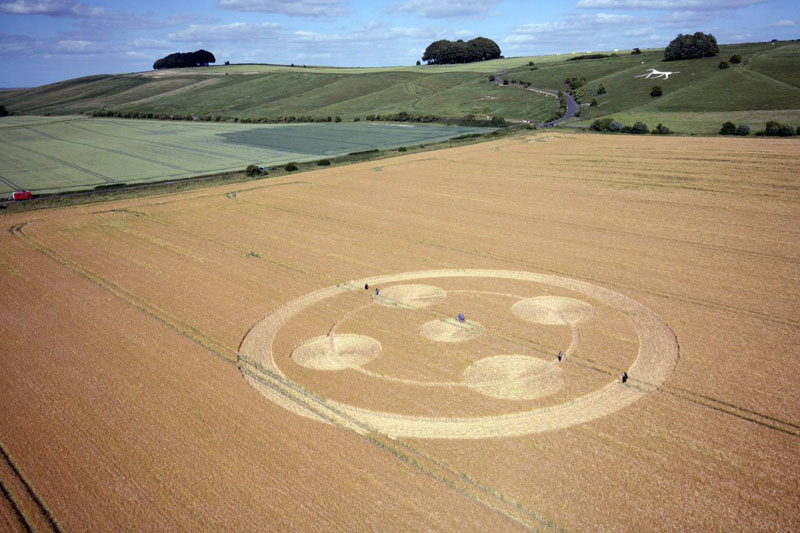
An early crop circle arrived on 22 June, just below the Hackpen chalk White Horse. This is an area in which we have had several wonderful crop circles over the years. It is one of the footholds of the Knights Templar.

We are told that ‘The Knights Templar were a powerful medieval military-religious order founded around 1119 to protect pilgrims in the Holy Land, becoming a significant military force during the Crusades. They accumulated vast wealth and land through donations and sophisticated financial management but fell from grace due to their wealth, power, and alleged heresy. In 1307, French King Philip IV had the Templars arrested, tortured, and forced to confess to false charges, ultimately leading to their official suppression in 1312.

The Knights Templar no longer exist in their original form, having been disbanded in the 14th century. However, modern organizations and groups, such as the Masonic Knights Templar, carry on their legacy by supporting Christian faith, engaging in charitable work, and promoting chivalric ideals, with the Portuguese being a potential historical link to the original order.’

Returning to the crop circle, it lay in barley in the field below the chalk White Horse, a simple but most welcome one. Sadly the farmer harvested it out within 24 hours.

Hackpen Hill White Horse, near Winterbourne Bassett, Wiltshire - Copyright © Lucy Pringle

This whole area is one of special interest; it has a unique atmosphere or quality to it. It is called the Hackpen Ridge Way and, from a distance, you can locate it easily by the three enormous trees equidistant from each other, standing proudly against the skyline.

James Hussey and his family have farmed along these fields for several generations, and many have been the wondrous circles which have graced his land. There is a place where one can park at the top of Hackpen Hill, and one can feel the presence of one’s ancestors as soon as you get out of the car. As you walk along the farm track, you will come to a little wood on your left.

One year I took a group of Australians who did not mind if there were no circles; what they really wanted was to feel the energy of the places where circles had appeared regularly. On our way to the fields, we passed this little wood. To fully appreciate the energy, you have to visit it yourself. They were so enchanted by its special spirit, they felt they could have stayed there forever, and I had the greatest difficulty in moving them on to our next special place! We ended the tour in the last chamber of the ancient West Kennet Long Barrow, dating back to some 3650 BC. It consists of five chambers; the final and largest of the chambers had the unique quality of special and wonderful sound effects. This was the final destination of interest, especially as they had brought their crystal singing bowls with them. The music that came from their bowls in that very special place was completely magical, and we forgot the cares and worries that normally beset our lives and lost ourselves, listening with rapt attention to the heavenly music.

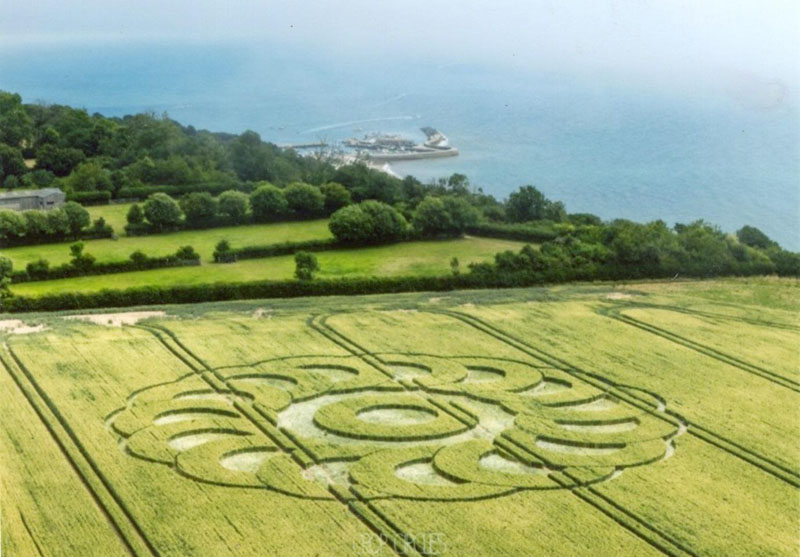
Moving on to this summer, an interesting circle was discovered further west than ever before, near Lyme Regis —

The name dates back to King Edward I, who granted the town a royal charter in 1284. Part of the name is after the River Lyn, which flows through the town. This royal designation was in return for the town’s promise to build warships and collect taxes, and was later confirmed by Queen Elizabeth I in 1591.

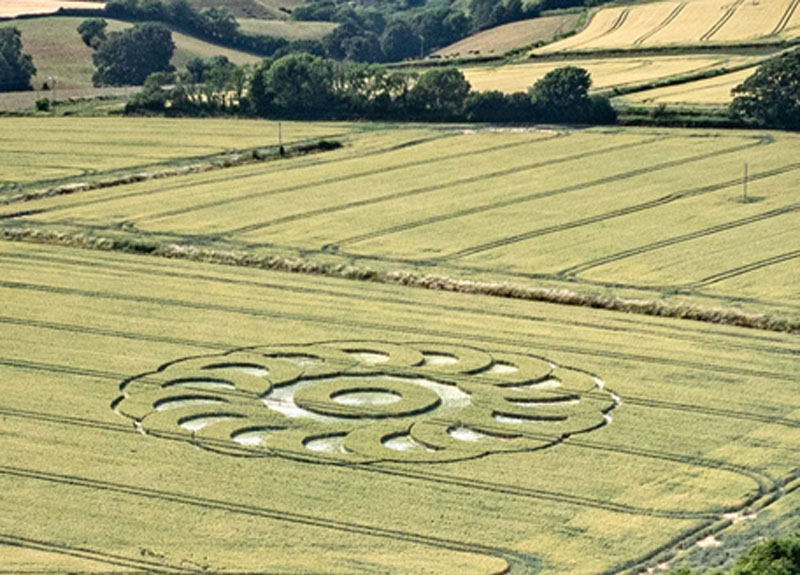
Ware Farm Manor, near Lyme Regis, Devon. 28th June. 170 feet (51.8 m) diameter. Wheat. This crop circle features central rings, surrounded by twelve overlapping crescent shapes arranged in a precise circular pattern, resembling interlocking petals or gears - Copyright © Nick Bull 2025 Stonehenge Dronescapes Photography

Several photographers took images and I love this one.

Copyright © 2025 Hugh Newman megalithomania.co.uk

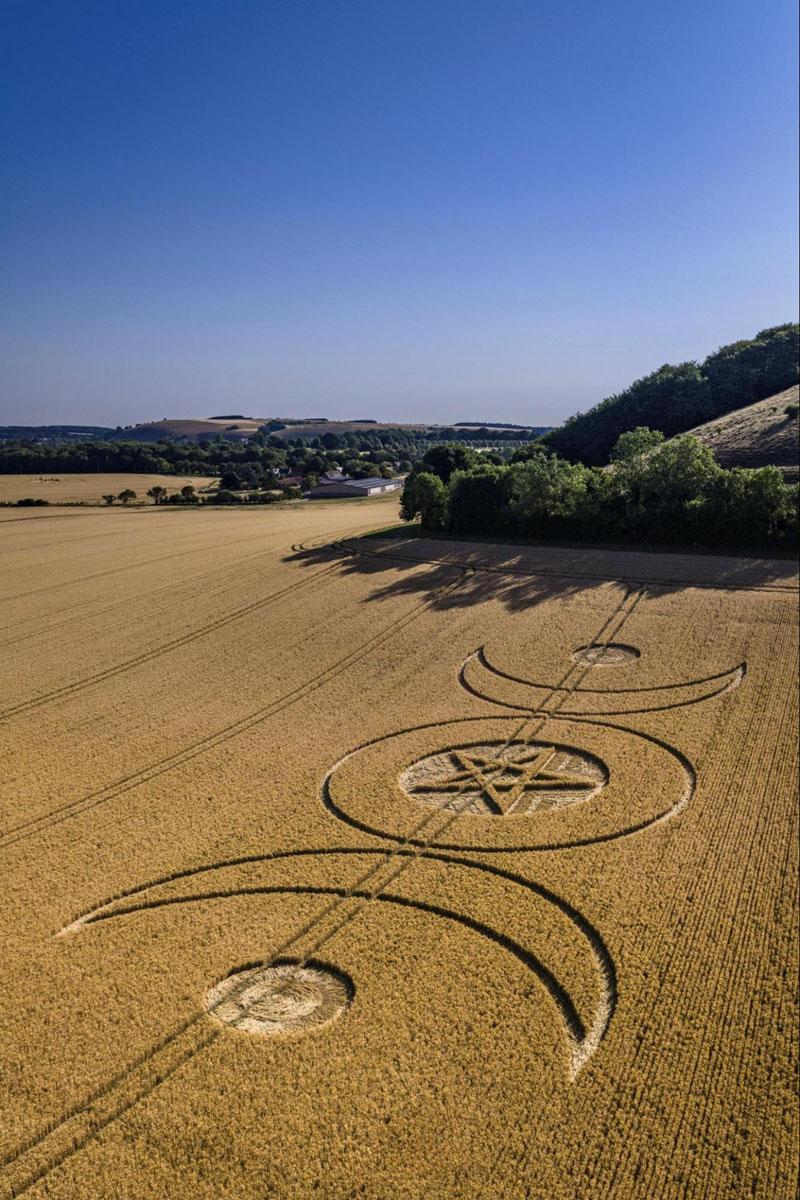
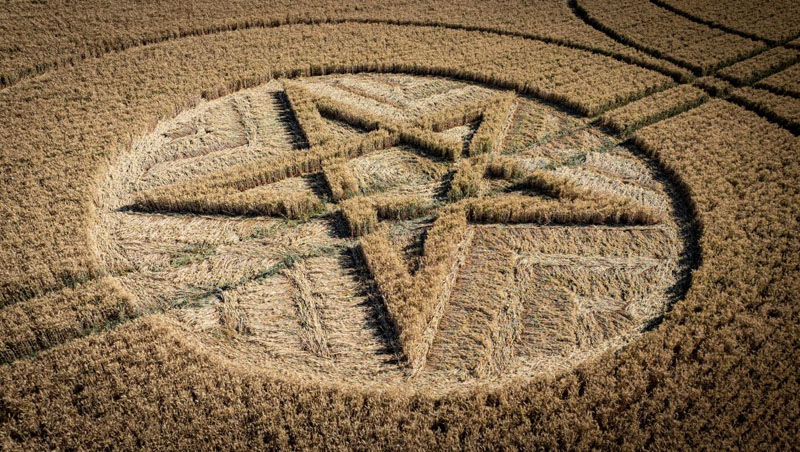
Next came a large, symmetrical crop circle featuring the Triple Moon symbol, with two outward-facing crescent moons flanking a central full moon circle that contains a bold five-pointed star (pentagram). The design has small circular motifs at each end. 12th July 2025 ‘The triple moon symbol, often associated with feminine energy, represents the Triple Goddess in Wiccan and pagan traditions. It embodies the three phases of a woman’s life: Maiden, Mother, and Crone, which also correspond to the waxing, full, and waning phases of the moon. This symbol is used to honour the cyclical nature of life, femininity, and intuition.’

Copyright © Nick Bull 2025 Stonehenge Dronescapes Photography

Beech Clump, near Ludwell, Wiltshire - Copyright © 2025 Hugh Newman megalithomania.co.uk

Beech Clump, near Ludwell, Wiltshire - Copyright © 2025 Hugh Newman megalithomania.co.uk

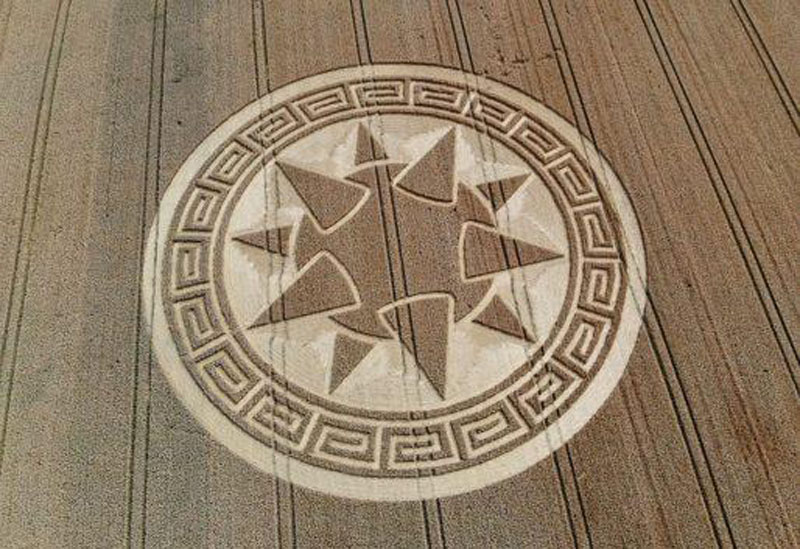
Not to be forgotten was a circle sent from Germany.

Frieding, near Andechs, Bavaria, Germany. A central circular motif resembling the head of a mace, bordered by a Greek ‘key’ design. Wheat. c.250 feet (76 m) 20th July 2025 - Copyright © Toni Bartl

First Tour

Both my tours were well overbooked, and if I take tours next year, those people who missed out this year will be notified.

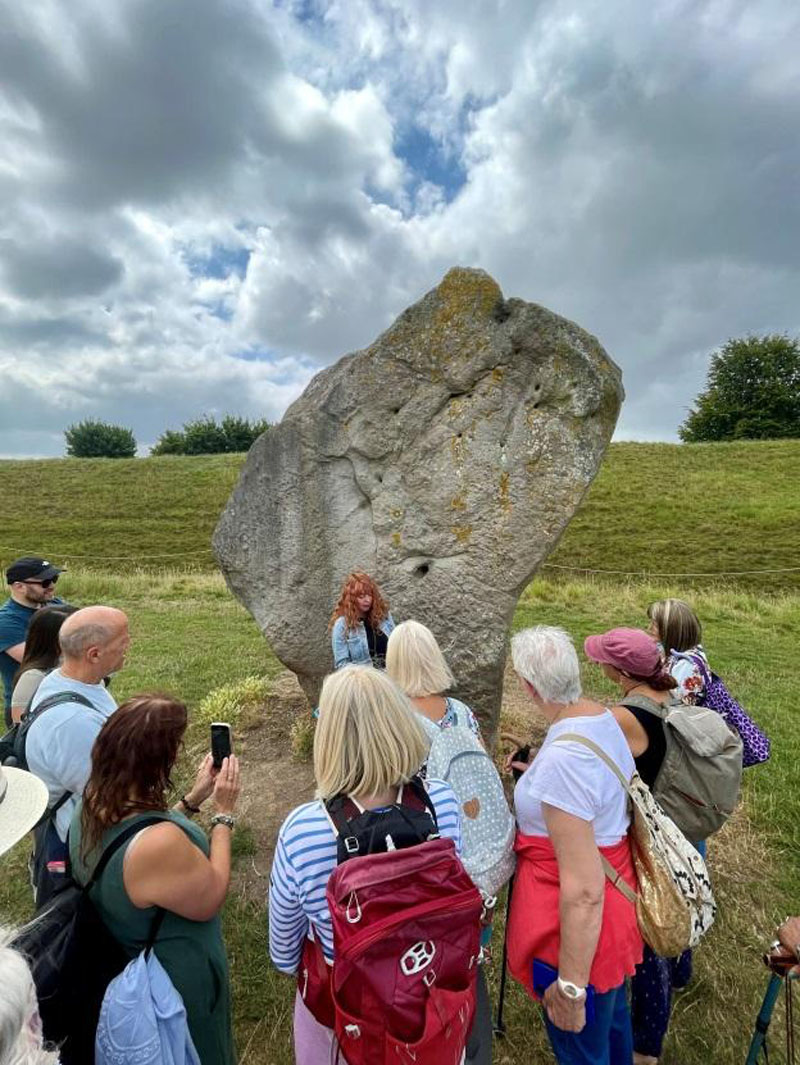
By the time they were taking place, sadly there were no circles available. However, it turned out to have been one of the happiest and most instructive of any tours I have had the privilege of taking. It was a perfect day and we all met, as usual, at the Silbury Hill car park. As in other years, we got into as few cars as possible and parked in Avebury car park. From there, we walked to the main street where we were meeting Maria Wheatley, who took us round the stones enthralling us with her in-depth knowledge and understanding of the area and illustrating her talk with diagrams and photographs; she enchanted us with the magic of Avebury. I recommended bringing dowsing rods (these can easily be made from a pair of metal coat hangers). “For nearly 30 years, author and researcher, Maria Wheatley, has researched megalithic sites across the world. Maria is a second-generation dowser and geomancer who is the UK’s leading authority on the geodetic earth energies, ley lines and grid lines.

She has lectured worldwide and has shown the British Dowsers and other dowsing societies how to locate and find geodetic earth energies. Maria has worked alongside experts such as Rodney Hale to prove the existence of earth energies and how the stones can transmit electromagnetic energies.

Maria was the first independent researcher to track down and photograph the elongated (long-skulled) people of Stonehenge. Her exciting new finds regarding the long-lost people associated with the ancient monuments will soon be published in her forthcoming book, which will be a world first.

Maria has tracked down a unique priestesshood of Europe, the Bronze Age King or Priest that once ruled Avebury Henge, the Neolithic Queen of Stonehenge and has unearthed new finds that show us how and why certain monuments were constructed and used.”

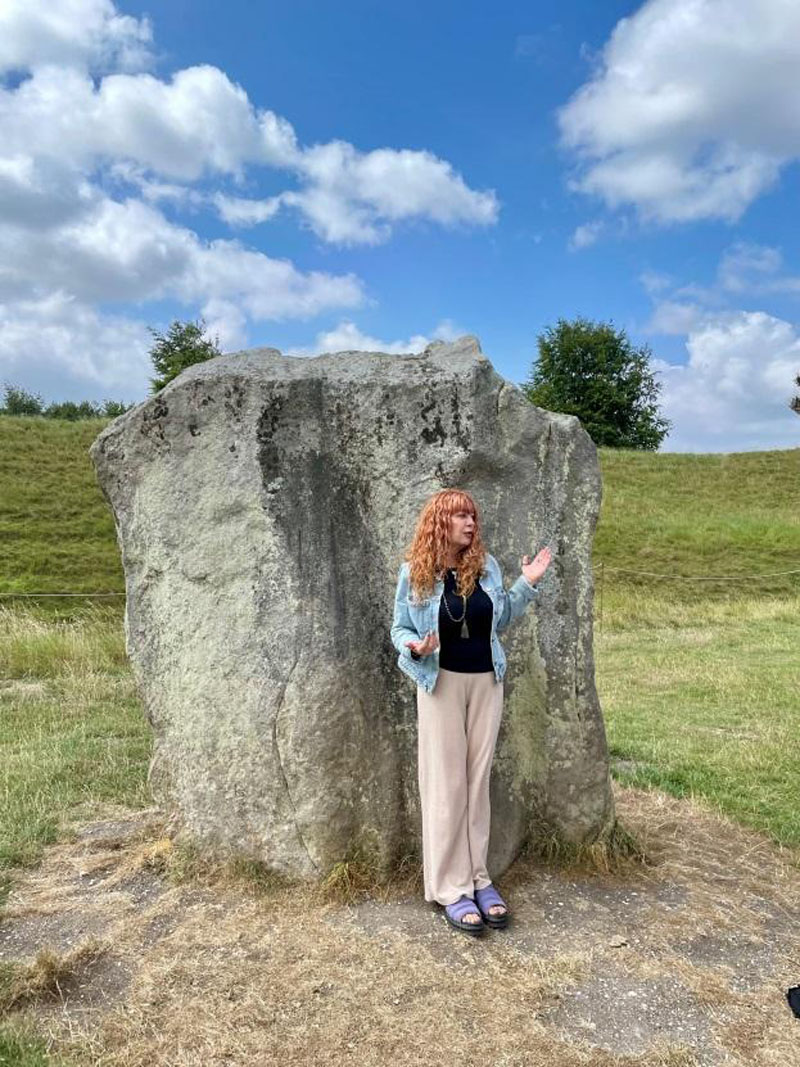
Maria Wheatley image - Copyright © Sonya Julia

Maria Wheatley and group - Copyright © Sonya Julia

Our Group

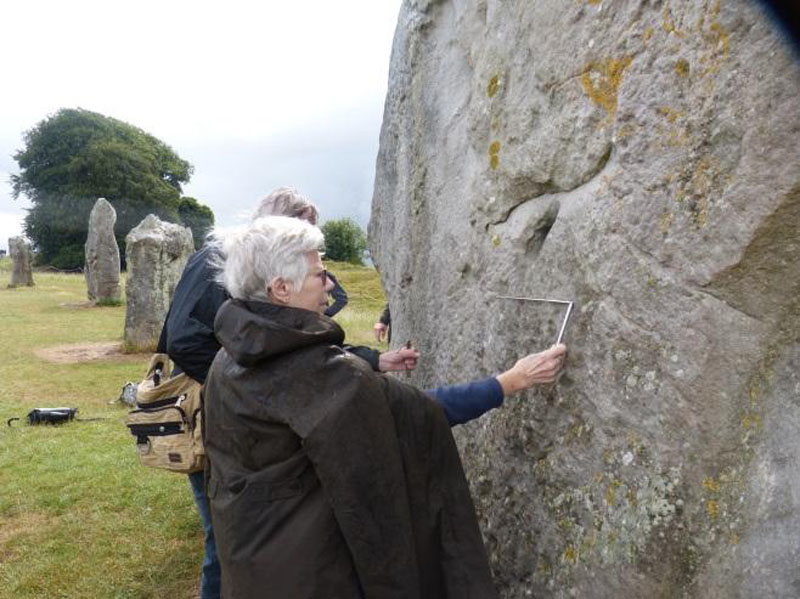
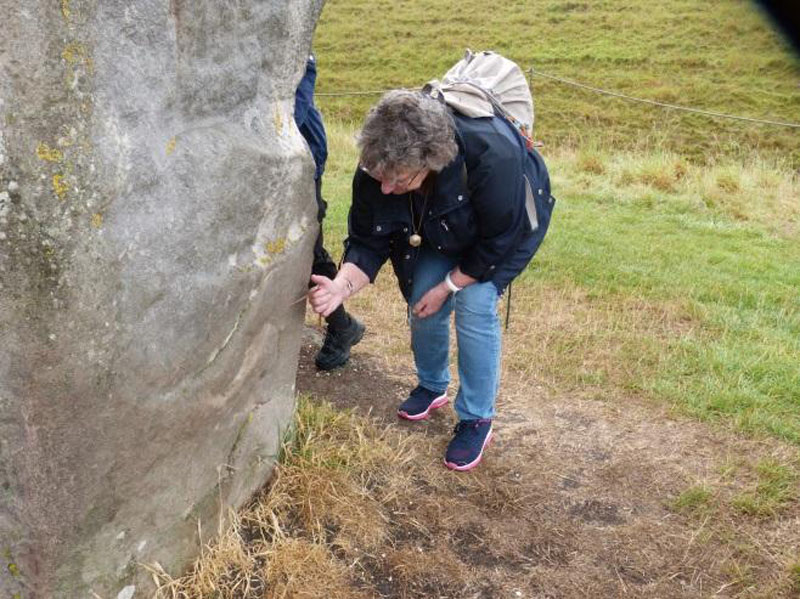
Measuring the bands of energy

Maria is a true professional, and we were all hanging on her every word and eagerly looking at the written details and pictures she had brought with her to illustrate her talk. The detailed years’ history of Avebury and the explanation of the different energies of the various stones — and how this can be measured. Sometimes this energy can reveal itself in different bands moving up from the base of the stones. We could test these bands of subtle energy moving up the stones, as the rods reversed at the different levels. In addition, we were shown the different healing areas of several stones.

After this special and uplifting experience, we had an enjoyable lunch at the Honey Street Café. When visiting the Honey Street complex of shops, there is another excitement, which is a ‘must’; it is the magnificent Crop Circle Exhibition, the soul and brainchild of Monique Klinkenberg. This is an experience not to be missed, as not only does it tell the history of the crop circles, but has the most extensive display of dazzling crop circle photographs to be found anywhere. Several years ago, Maria was captivated by the circles to such an extent that she sold her thriving business in the Netherlands and set up this amazing exhibition. Make sure you add it to your itinerary.

Tearing my group away, we next visited the famous and ancient West Kennett Long Barrow before gathering everyone’s cars from the Silbury Hill car park.

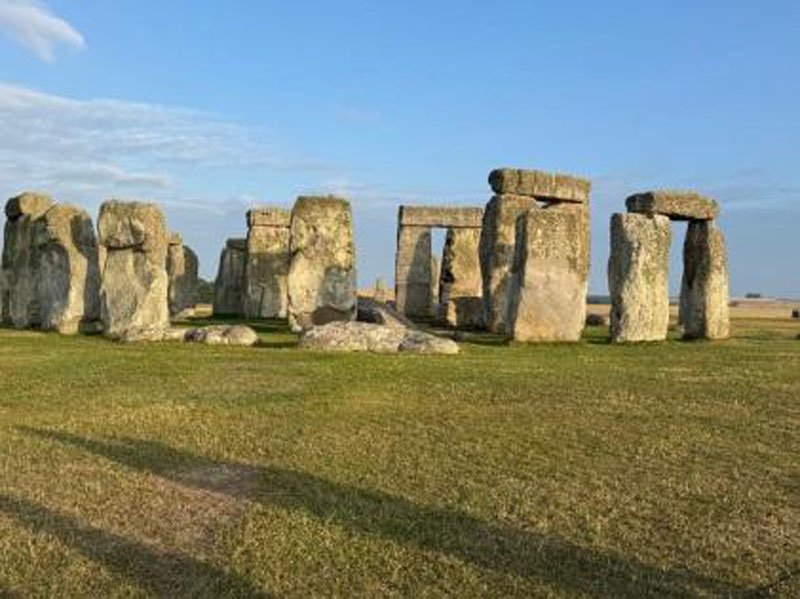
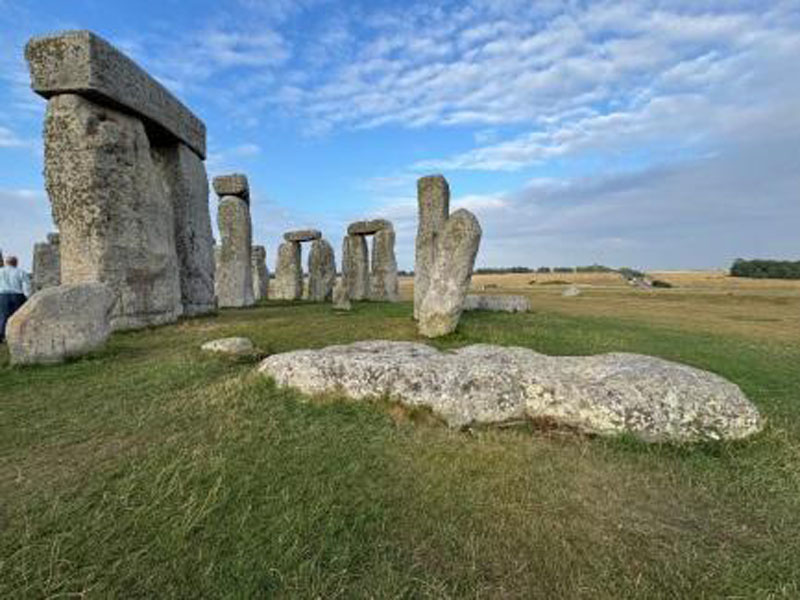
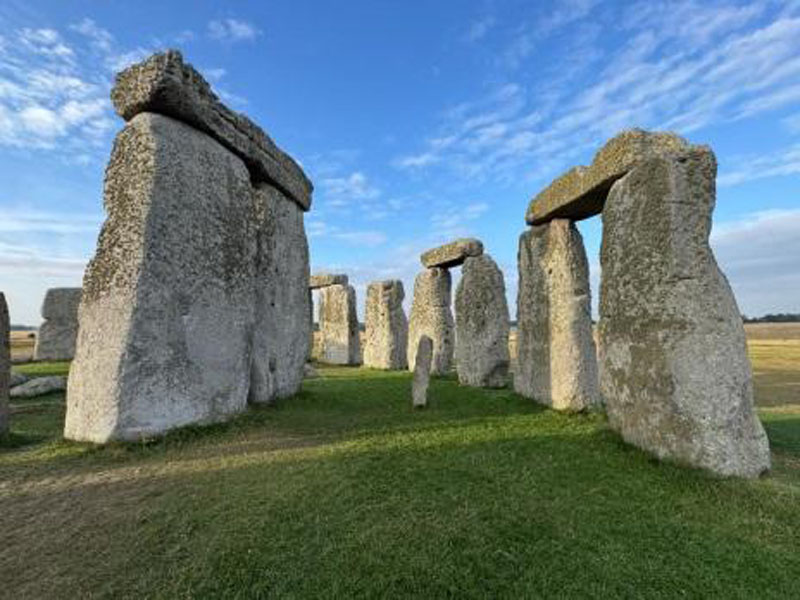
We made our way to the Stonehenge Visitors Centre, where I met several additional people who were not on the first part of the tour. We visited the most excellent exhibition before getting on the coach and making our way to the stones. As we drew closer, the stones appeared to be growing in size — nearer and nearer. As soon as the coach drew up, everyone rushed out. It is a very short walk from the coach to the stones and, as you approach them, you find you are not only marvelling at their size but feeling their energy as you get closer and closer to the giant megaliths.

Stonehenge - Copyright © Sonya Julia

Stonehenge - Copyright © Sonya Julia

Stonehenge - Copyright © Sonya Julia

Over the years, I have taken many people to the stones, with several people having extraordinarily wonderful past-life experiences. This year, the weather was perfect and the stones seemed to be surrounded in a special ethereal light. We had an excellent guide, giving us an interesting and intriguing insight into our surroundings.

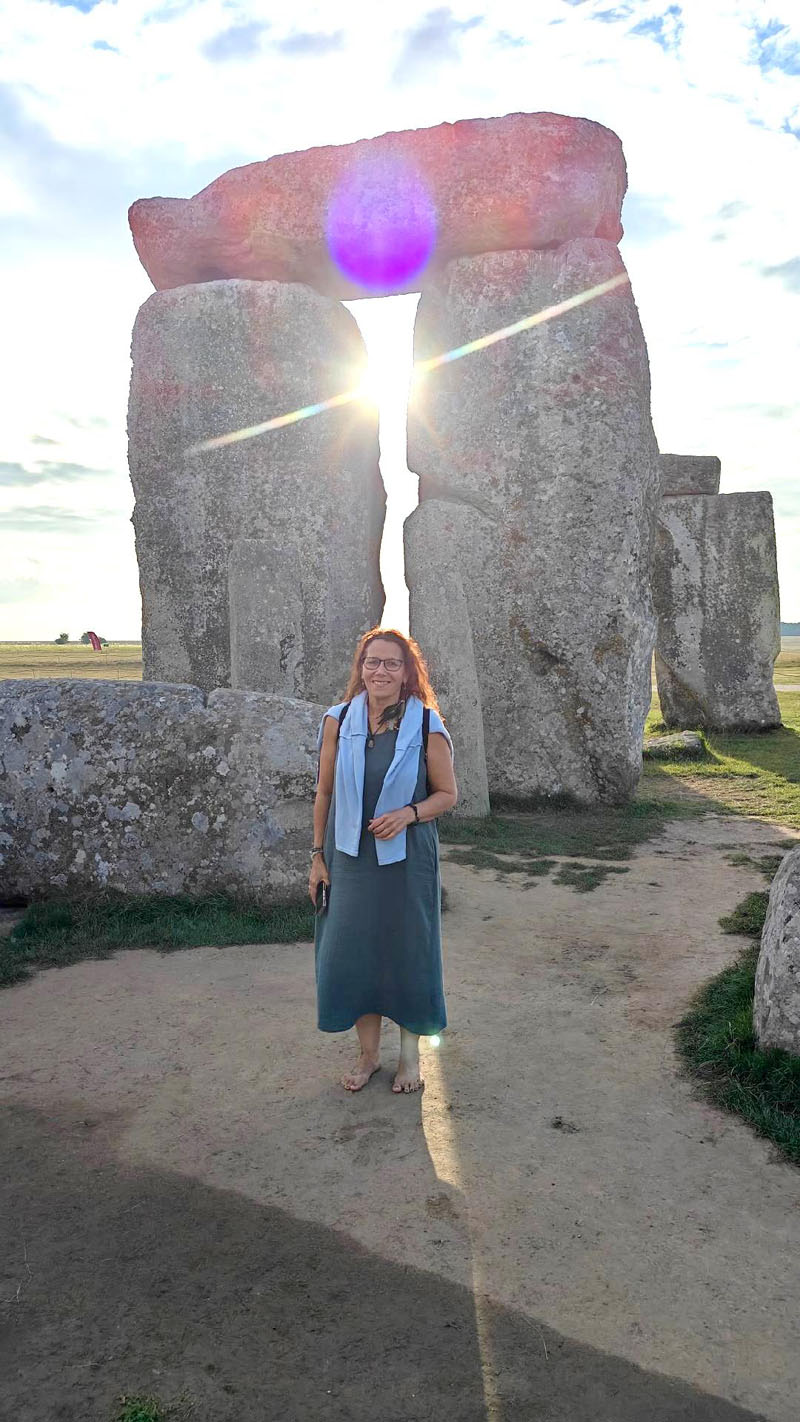
I am going to show you an amazing picture taken by Paul Stilwell of one of my group, Sonya Julia.

I was quite taken aback when I saw it, as it seemed to be all part of what many of us were experiencing.

Sonya Young - Copyright © Paul Stilwell

To many people, the above picture may carry different meanings, and I received one (below) from a friend, David Olliff. I would love to hear what it may mean to you.

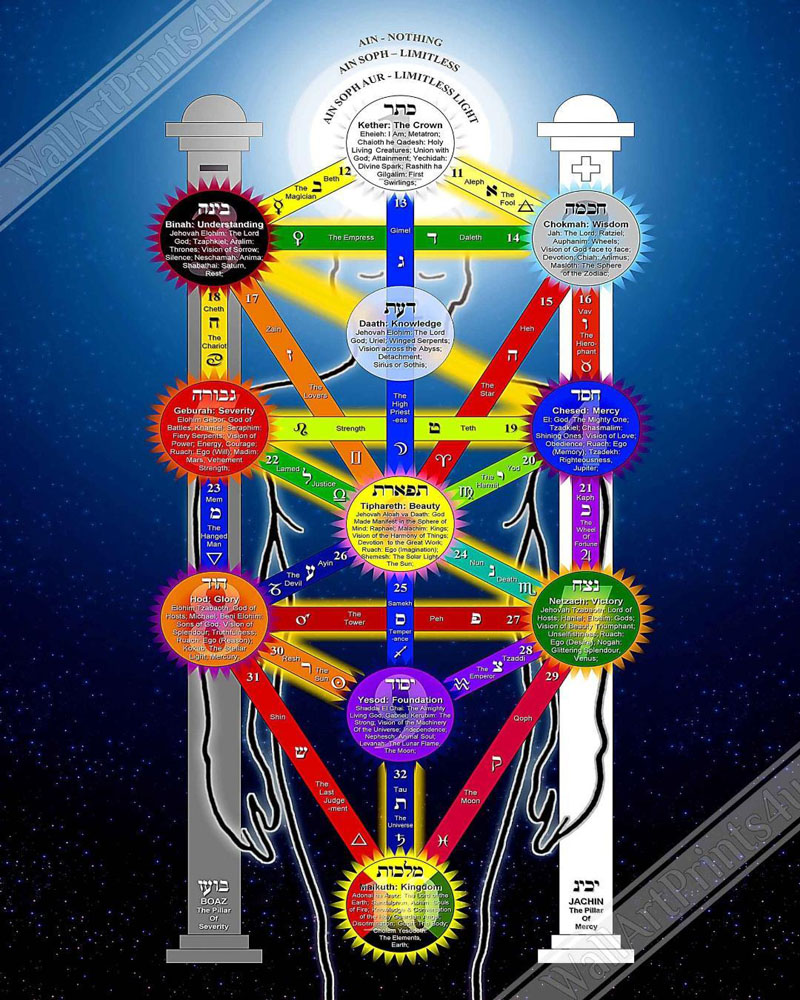
“Seeing the picture of your friend standing between two sarsen columns with the sun streaming through the gap, I was struck by the vivid purple coloured sphere perfectly positioned on the lintel. I have a tendency towards a kabbalistic interpretation of signs. For me, the colour and position of the sphere perfectly represented Yesod. Yesod, meaning Foundation, is the ninth sephirah on the Tree of Life. It is usually represented with the colour purple or violet. Each sephirah on the Tree of Life represents an aspect of the divine made manifest. There are ten of them, and they are often thought of as divine lights. Yesod is just one stage of creative manifestation prior to the physical kingdom. On the Tree of Life, Yesod is positioned between the twin pillars of divine Mercy and divine Strength. These are the pillars of Solomon’s Temple. For me, the purple sphere on the lintel above your friend’s head reveals the metaphysical structures which support creation. Just like the sarsens of Stonehenge seeming like a scaffold, holding up the entire cosmos.”

It was the end to a very happy day, and I had so many wonderful emails afterwards.

Second Tour

My second tour did not have an auspicious start, weather-wise. It was raining and continued raining and raining until just after lunch. Maria Wheatley had kindly agreed to take this second tour again. As before, we met Maria at 10.30. Maria is quite amazing and gallantly took us round, somehow adapting her talk with endless fascinating information despite the weather. ‘Did we want to continue?’ she asked, with rain dripping off her hood. So intrigued was everyone that, to a person, everyone said, ‘Yes, please continue.’ We were completely absorbed in everything she said and eagerly looking at all the illustrations and pictures which she had cleverly protected in plastic sleeves to keep them safe. She has a lovely sense of humour and, despite being thoroughly soaked, we all loved every moment.

I wrote to her afterwards, as she had been truly magnificent; there are very few people who would have continued, unfazed and undaunted, with such tremendously fascinating information and good humour. Again, we hung on each new insight she shared, eagerly anticipating what might come next. What a professional.

I do really hope she might have some idea of what an invaluable contribution she made today.

As before, we went to lunch and warmed up at the Honey Street Café, followed by a visit to Monique’s wondrous exhibition. Instead of an evening visit to Stonehenge, there was the option of flying over the sacred area — Avebury Stone Complex, Silbury Hill, West Kennett Long Barrow — and also any nearby circles. There were the remains of an old circle which had been harvested, but it still showed up visibly and clearly. To the best of my knowledge; this is the first time in the history of the phenomenon that we did not have a crop circle in August.

I am hoping to take either one, or possibly two, tours next year. I will confirm that in the New Year.

As in previous years, highly specialised advanced clinical physiologist Paul Gerry again kindly agreed to conduct our annual scientific tests into the temporary relief of Parkinson’s disease and Essential Tremor.

I have received the results from the 6th July tests, but I would like further clarification on certain points. I will send the report in my next general letter.

Pam Gregory

Stone the Crow

Both of my 2025 tours are now fully booked.

Stone the Crow

This is just a very short letter to bring you up to date with what is happening in the fields. Very little to date, I fear.

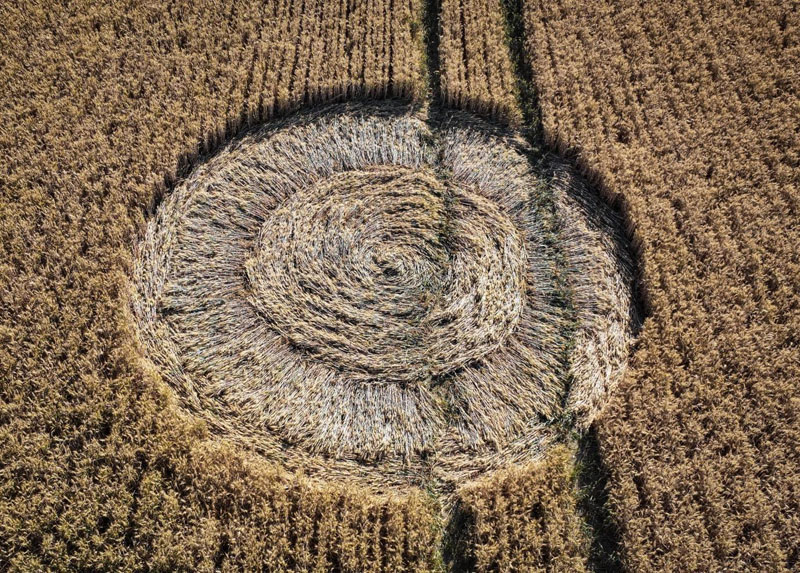
On the morning of the 8th of June, the circle below was found at Falkner’s Circle, near Avebury, in barley.

Falkner's Circle, near Avebury, Wiltshire – 8th June 2025
Barley, 110 feet (33.5 m) diameter

Falkner's Circle, near Avebury, Wiltshire – 8th June 2025
Barley, 110 feet (33.5 m) diameter

It has been suggested that the circle may resemble Falkner’s Circle itself. Falkner’s Circle is a mystery, relating to a number of stones that once made up the circle, and the area in which the crop circle appeared.

We are told by Wikipedia that:

‘Falkner's Circle was a stone circle near the village of Avebury in the south-western English county of Wiltshire. Built from twelve sarsen megaliths, it measured about 37 metres (121 ft) in diameter, although only one of these stones remains standing.’

‘The ring was part of a tradition of stone circle construction that spread throughout much of Britain, Ireland, and Brittany during the Late Neolithic and Early Bronze Age, over a period between 3300 and 900 BCE. The purpose of such monuments is unknown, although archaeologists speculate that the stones represented supernatural entities for the circle's builders.

Positioned in a dry valley, the circle was erected at the southern end of a field that contained a range of natural sarsens. It is possible that the megaliths were erected very close to where they were naturally found. The site had previously seen human activity in the Mesolithic period and may have been symbolically meaningful to local communities long before the circle was created. The ring was located close to other Late Neolithic and Early Bronze Age monuments, such as the West Kennet Avenue and Avebury stone circle, although its precise relationship to these is unclear. Extensive flint knapping took place at the site during the Late Neolithic or Early Bronze Age.

Archaeological evidence indicates that in the Iron Age, a hearth was placed on the site, and in the post-medieval period a number of the stones were toppled and destroyed through burning. Most of the stones in the circle were lying prone on the ground by the seventeenth century, which might explain why it was left undiscovered by antiquarians exploring the area in that period, like John Aubrey and William Stukeley. The earliest known report of the site came from a Mr. Falkner, who discovered it in 1840 while riding in the area. Due to the intensification of agriculture, all the prone stones were removed—thus destroying the circle—in either the late nineteenth or twentieth century. The site was excavated in 2002 in an archaeological project led by Mark Gillings and Joshua Pollard.’

Just as Falkner’s Circle was destroyed, stone by stone, over the years, it makes one wonder how much of our ancient archaeology and history has been lost in the interests of modern farming. Also, since the entirety of the stone circle no longer exists, I wonder whether it once contained important solar alignments, as found at sites such as West Kennet Long Barrow.

Prof. Jonathan Paul De Vierville, PhD, MSSW, LCSW, LPC, Professor Emeritus: History/Interdisciplinary Studies, Alamo Colleges, writes:

‘I really liked the Avebury Falkner’s Circle formation and was sad to learn that it was cut out so fast.

There is a lot of hidden Sacred Geometry in the formation, but it is clearly a circular introverted and extroverted dynamic motion and play on a Circular Divination of Ten… or what is classically known as the Holy Tetractys, as taught in ancient times by Pythagoras.

atTENtion / inTENtion / reTENtion!

Thanks for the GREAT ARTFUL DRAWINGS… so what is going on inside you as you are in the PROCESS of DRAWING these CC INFORMATIONAL FORCE FIELD FORMS, especially when you SEE THROUGH THE FORMS to the DEEPER Meaningful Symbolic Significance?

Good Question… is/was Falkner’s Circle a Stone Circle or is/wasn’t it?

Of 10 or 12 Sarsen Stones?

Or a place for post-Medieval stone-breaking?

And now since cut, it’s just a Memory!?

Regardless, it’s a Memorialized Location with symbolic significance and memorable Circular Meaning!

Also, Nicholas Kollerstrom (born 1946), an English historian of science, has commented on the number ten:

‘Clearly, all ten outer circles have their centres on the same circle.

Lines joining the centres of the five big circles touch the smaller ones tangentially.

’The tenfold 'star' at the centre turns out to be part of a twenty-fold design, doing a sort of dance in between the outer tenfold design. It certainly defines the circle at the centre!

The mystery remains! Hopefully, in my next letter, I will be able to send you more information about what is happening in the fields.

My annual Scientific Research Day is on the 6th of July, and highly specialised advanced clinical physiologist Paul Gerry has again kindly agreed to conduct annual scientific tests into the temporary relief of Parkinson’s disease and Essential Tremor. I will be sending you the results in due course.

Old and New

My son and I spent a wonderful day last week visiting an ancient church at Warnford, Hampshire. As it is situated in the privately owned Warnford Park, it is open on Sundays for church services; otherwise, special permission is needed to visit it. The person to whom I spoke asked my name and, when I told him, he was thrilled and said he had read all four of my books! Result—instant permission to visit! As the crop circle phenomenon is such a controversial subject, the result might easily have gone the other way!

To have the church and ruins to ourselves was very special. It was a glorious early summer’s day, and our whole beings were filled with the peace and serenity surrounding us—so far from the bustle of everyday life.

Dating mainly from the 1190s, Warnford Church, the Church of Our Lady, has an earlier tower and Saxon roots. The first church on the site may have been built by St Wilfrid in the 680s. It is known locally as the "Snowdrop Church" due to the abundance of snowdrops that blanket the grounds in spring.

The Snowdrop Church

Deep in the woodlands of the Meon Valley, the Church of Our Lady of Warnford stands in peaceful isolation. This is hallowed ground where God has been worshipped continuously for thirteen hundred years. The church serves a scattered parish of farms and cottages, for there is no real village centre of Warnford.

We are also told:

A single-vessel church with no architectural division between nave and chancel, but with a wide span. Assertive west tower with big Romanesque strip-buttresses on the corners, of three stories, with Romanesque round-headed windows in the top two stages, and two circular windows at the top of the third stage. No sculpture on the tower except roll mouldings between the stories and around the windows. (The east face of the tower and the whole parapet is of brick, with an attractively cogged lower frieze.) Two inscriptions help date the fabric of the building and are likely also Romanesque in themselves. The font is also of the 12th century, but heavily mutilated.

Two ancient stone tablets, written in Latin, lay claim to the founding of this church by Wilfrid during his time in the Meon Valley. The people of Warnford believe that Wilfrid made his headquarters here, although the source of the claim has not been found. In any case, Adam de Port, the Lord of the Manor who lived in Warnford 500 years after Wilfrid, respected the link with the saint and rebuilt the church in stone in 1190.

The Meonwara—a tribe of Anglo-Saxon Britain—had probably chosen this site, a clearing in the woods beside the River Meon. It’s easy to imagine their settlement today. However, these grounds have undergone substantial changes over the centuries. Don’t miss the ruins of St John’s House, behind the church, built in 1210 by the St John family, who had married into the de Ports. This is a very rare example of a 13th-century hall, unique in the south of England and described in the church leaflet.

The flat ground to the left of the bridge as you approach was the site of an Elizabethan mansion built to replace the old hall, which first became a barn and then a ‘scenic ruin’ when the estate was landscaped by Capability Brown around 1760. At this time, the Meon was expanded into the lake we can see today, and the old riverside road from Alton to Gosport was diverted to the line of the present A32.

Pilgrim’s Prayer Panel

Adam de Port built this church and left these inscriptions:

‘Brethren, bless in your prayers the founders young and old of this temple; Wulfric who founded it; good Adam restored it’ (porch).

‘May the race signed with the Cross (i.e. Christians) from the rising of the sun bless Adam de Port by whom I have been thus restored’ (north wall - outside).

It was difficult to tear ourselves away for the booking we had made at The Shoe Inn nearby. Close it may have been, but we got thoroughly lost! However, driving down the ancient, narrow drovers’ lanes with their high banks on either side was a joy in itself.

Eventually, we arrived at our destination and had an excellent lunch, finishing by taking our coffee outside to sit overlooking the River Meon. Brown trout were swimming lazily among the floating reeds as the river idled along. The River Meon is one of our special and unique chalk rivers, which has the rare quality of maintaining a temperature of 57 degrees, summer and winter, regardless of the weather. The name “Meon” is thought to be of Celtic origin, potentially linked to the meaning “swift.”


New Circles

Moving on from the past to the present, we have had an interesting circle appear at The Gallops, near Sutton Veny, Wiltshire. Let us hope that 2025 may be a year to be remembered for the number and design—designs that will teach us more about ourselves and the world in which we live.

STOP PRESS…

Culliford Tree Barrow, Dorset 19 May 2025 © Billy Breen.

c. 150feet (46m) over all. Barley


My tour on the 24th July has been fully booked. If you would like to be contacted in the event of a cancellation, please contact Lucy  and ask to be added to her list.

There are still a few spaces places for the tour on the 31st July with the optional extra of flying over the crop circles and the ancient sacred landscape including the historic Avebury Stone Complex and Silbury Hill.

Celebrations and History


On 8th May, many countries in the Western world will be celebrating the 80th anniversary of VE Day—Victory in Europe. The surrender came into force at 23:01 that day in 1945.

However, despite the conflict being over in Europe, the war continued to wage in the Far East and Pacific, with many troops redeployed to fight in the East instead of coming home. The end of the war in Japan came a few months later, in August, after atomic bombs were dropped on Hiroshima and Nagasaki.

On Thursday, 8th May, at 12:19, a procession of about 1,000 UK service personnel from the Royal Navy, the Royal Marines, the British Army and the Royal Air Force will start at Parliament Square, finishing at the Queen Victoria Memorial. This will be followed by a flypast featuring the Red Arrows and 23 current and historic aircraft over The Mall and Buckingham Palace at 13:45.

Ukrainian troops from war-torn Ukraine will also be taking part in the UK's military procession. Major Pavlo, an officer of the Ukrainian marching contingent, said: 'The participation of Ukrainian service personnel in the VE Day parade in London symbolises our strength, courage and resilience. It is a recognition that Ukraine and its heroes stand at the forefront of the fight for freedom and peace in the world.

There will also be a church service to mark VE Day. A special service of thanksgiving is planned for Thursday, 8th May, at Westminster Abbey, with the King and Queen in attendance.

It will be a service of thankfulness and commemoration for the thousands of men and women who fought and gave their lives fighting for the freedom we experience today— children and civilians who got caught up in the theatre of war. Nor must we forget the many horses, the dogs that carried messages, and the carrier pigeons who performed selfless acts of immense courage and bravery.

A moment to reflect and give thanks for the peace that so many sacrificed their lives for during the Second World War.

In addition, churches across the country will also be holding services to mark the occasion, and many will ring their bells at 6:30 pm on 8th May.

On the day the war officially ended in 1945, the country erupted in a euphoric celebration. Spontaneous street parties broke out across the land, with dancing and singing that carried on through the night and into the following morning. Even Princess Elizabeth—our late Queen Elizabeth II—and Princess Margaret slipped out to join the jubilant crowds gathered along The Mall outside Buckingham Palace.

It marked the end of years of hardship. Every evening, blackout curtains were drawn tight, and the rules were so strict that if even the smallest chink of light escaped, a knock at the door would follow with a stern reminder to take more care. Food and basic goods were scarce. In sharp contrast to today's throwaway culture, people saved every scrap of string and wore their shoes until they nearly fell apart. Rationing was imposed on almost everything—food, clothing, fabrics—with some households receiving no more than one egg a week.

So when peace was finally declared, the sense of relief and joy was overwhelming—and most symbolic of all, the lights came on again.

Yet despite the war’s end, rationing lingered for nearly a decade. Restrictions continued on various items, and it wasn’t until midnight on 4th July 1954 that rationing in the UK officially ended. Meat was the final item to be de-rationed, bringing to a close 14 years of careful counting and constrained living.

The Tower of London is hosting a display of 30,000 ceramic red poppies in recognition of all those who fell during World War II. The poppy has long represented peace and sacrifice.

The Tower has had a long, varied and fascinating history - from serving as a royal residence to being the first London zoo - but it is most commonly known as a prison where many beheadings took place. Initially parts of the Tower of London (https://en.wikipedia.org/wiki/Tower_of_London) - including The White Tower — were built in 1087, but the building as a whole was begun in late 1066.

We are told that “…the Tower of London will be illuminated as part of a special remembrance display called 'Poppy Fields at the Tower'. This sound and light installation, running from 8th to 16th November 2024, will feature moving images reflecting on World War One and Two. The display will include falling poppy petals, silhouettes of soldiers, and images from the Tower's archives.”


Turning to other matters, a circle in oilseed rape was found at Wimborne Minster, near Poole, Dorset. Reported 11th April 2025.

Photo: Crop Circle Access/Geometry, Circles and Landart

Whilst many people will have been enjoying the sun over recent days and weeks, the farmers have said the dry weather is affecting their crops. The Berkshire Post reported:

“The lack of recent rainfall has meant some crops are not sprouting in drier ground, and there is no forecasted rain in some areas for several days. For Colin Rayner, from Stubbings Farm in Maidenhead, spring barley planted weeks ago has 'hardly germinated', which has left him hoping for rain at the weekend.

An expert from the University of Reading said the seasonal weather patterns on which farmers rely 'have clearly changed a lot' over recent years.

'We had a very wet winter,' Mr Rayner told BBC Radio Berkshire. 'I think we had 90 days of rain virtually from November to the end of February. At the end of February, it decided to stop raining.”

Let us hope that the situation changes and provides the farmers with sufficient rain to grow their crops without any more worry.

I am a great optimist, and the rains will come.

Where has the Time Gone?

Where Has the Time Gone?

I realise with horror that I have not written to you for so long—not since the end of February. The truth is that nothing new of great interest has happened. It seems at times as though the world as we once knew it is reshaping itself. It is a time when the best course of action seems to be that of an observer, keeping one's own values rather than getting caught up in the maelstrom all around.

I have just been walking around my garden, and the growth of everything seems to be an example of how to continue thriving and not be drawn into something beyond our control; nature is showing us the way forward.

Regarding time, we are often told to be in the present. In fact, Eleanor Roosevelt wrote:

“Yesterday is history, tomorrow is a mystery, and today is a gift. That is why they call it the present.”

However, the Mayans have a completely different concept of time. Their fascinating belief is that there is no such thing as the present—it simply does not exist. They recognise the past, which is in front of them, because they know all about it and can thus see it. The future is behind them because they cannot see it. It is still to come, and they don’t know what it will bring. Once the future arrives, they know about it, and then they can see it—it is before them and immediately becomes the past.

It brings us to the realisation that as a human race, we may all see things in different ways. What may be right for one person does not necessarily hold true for another.


I came across several inspirational quotations:

“But let there be spaces in your togetherness and let the winds of the heavens dance between you. Love one another but make not a bond of love: let it rather be a moving sea between the shores of your souls.”
— Khalil Gibran

Desmond Tutu, the South African Anglican cleric who in 1984 received the Nobel Prize for Peace for his role in the opposition to apartheid, wrote:

“God's dream is that you and I and all of us will realise that we are family, that we are made for togetherness, for goodness, and for compassion.”
— Desmond Tutu

He also said:

“If you want peace, you don't talk to your friends. You talk to your enemies.”
— Desmond Tutu


We have been having quite exceptionally warm weather, and the spring flowers are bursting into bloom. The snowdrops and primroses are giving way to azaleas. (I have one in my garden that was here when I moved in over 30 years ago. Each year, I wonder if it will survive the winter, and yet again this spring, its buds are about to burst into flower.)

Also, the Amelanchier lamarckii has almost overnight turned into a sea of blossoms. How blessed we are.

I have just read that Michael Morpurgo—author of some truly special books—has a new release. He is high on my list of favourite authors. He has a way with words that few authors possess. A couple of his books, War Horse and Private Peaceful, are written with such sensitivity; his words pierced my heart.

The reason for mentioning him now is that his latest book, Spring, has just been released—appropriately enough, at this time of year—and I cannot wait to read it.

However, as you can imagine, this warm weather is not for everyone. The poor farmers are tearing their hair out, as spring is the time when crops such as barley and early wheat should be well established. At the moment, they are barely a few inches high—not yet enough to leave anything beyond a temporary imprint. This is the crucial growing period of the year.

We are told that insufficient rainfall directly affects soil moisture levels, leading to stunted growth and lower crop yields. Many crops require a specific amount of water to thrive, and without adequate rainfall, they may fail to mature. But don’t despair crop circle lovers as nature has a way of healing itself and soon the fields may be rippling with lush growth. I have seen this happen before.

However, to add to the farmers’ concerns, for the first time, inheritance tax is being levied against those whose estates—when they die—are valued above a certain threshold. Given that the value of agricultural land has risen considerably, many farmers—already struggling—may no longer be able to pass their farms on to the next generation. Instead, they may have to sell the land in order to pay the inheritance tax. Many have worked the same land for several hundred years, passing it down through generations.

Maybe this is a good moment to say how grateful we are to the farmers who allow us onto their land to enter the crop circles. Although it may seem hard, we need to understand that it is their land and livelihood. Sadly, many times people have damaged crops, and it is for that reason that some farmers have closed their fields to visitors.

Crop Circle Tours

Please remember to book your place/s; as already mentioned this probably the last year I will be taking will be taking the tours. Sadly I only have a limited number of places available. I have met so many wonderful people for all over the world; it been such a pleasure and privilege for me.

Oliver’s Castle, Nr Devizes, Wiltshire. 15 April 2007

A Subtle Change


Quite apart from a strong feeling of global changes afoot that have been growing in me for some time, it is interesting to note how this sense of change also seems to be running through the various schools of religious teachings, I have very little to report. I thought I would send you one of the stories I wrote about a friend*. It is taken from my book The Energies of Crop Circles: The Science and Power of a Mysterious Intelligence (available on my website).

To my great surprise, I found that I was already talking about a subtle change of energy, evident in the crop circle phenomenon, back in 2011. Our world is in a constant state of movement, but this movement can sometimes lead to greater and more urgent upheaval. Were the crop circles the harbingers of a more noticeable change on a global level?

We seem to forget that the Earth is a living, breathing life force, far more sensitive and in tune with the cosmos than we will ever be. As evidenced by scientist, environmentalist, and futurist James Lovelock, his Gaia hypothesis suggests that “the Earth is a self-regulating system, like a giant organism.”

Maybe it could be argued that the circles were subtle precursors, bringing new and sometimes challenging energies to those listeners to whom they spoke. They opened windows of understanding and delved into new areas of learning, leapfrogging us from metaphysics, geometry, and music to theology, art, symbolism, and encoded messages. Above all, these messages came from the heart, reminding us that we are small players in a far greater cog.

“A Subtle Change – June 2011 - from the Energies of Crop Circles

There seems to be a subtle change of energy in the crop circle arena that I have been detecting over the past few years. It is hard to put one’s finger on this elusive element, ebbing and flowing as it does in all directions.

On a more fundamental level, I get the feeling that for many people, a crop circle visit has become a "must-do" item on their list of experiences. It is hard to judge how many find this a rewarding experience. Were they seeking something specific? How many will return, or was it just a one-off?

Certainly, as we entered 2011, I believed this would be a transformative year in the crop circle theatre, just as life-changing events were happening all over the planet. Focusing on the final good that will emerge from these events is of the essence.

On a microcosmic scale, the 1987 hurricane in England cut through great swathes of our landscape, destroying age-old trees and forests. While it brought despair, the startling new growth that followed transformed our landscape with unforeseen benefits and beauty.

“A Jet Taxiing in My Head”

Health reports were fewer in 2011 than in previous years, but the quality of some was outstanding. The first formation of significance appeared overnight on 17th June in Hampshire, at Cow Drove Hill, above the picturesque village of King’s Somborne. Villager Keith Hibbige, the first to enter the formation, kindly alerted me.

Cowdrove Hill, King’s Somborne, Hampshire

Of primary significance was the fact that it had been raining that night. Yet, despite the muddy field, there was no trace of mud on the fallen crop, as revealed by Keith’s excellent images (sadly mislaid at present). When walking along a muddy tramline, one inevitably collects soil on the soles of one’s shoes, and this would translate into clear signs of mud on the fallen crop.

Having flown over the formation, I visited it a few days later. Keith was kindly waiting for me. Before my arrival, he had sent me some strange reports. He initially visited the formation for just 20 minutes on the morning of Saturday, 18th June. Whilst inside, he felt disoriented. Then, driving home afterward, he noticed his brain was focusing on anything circular, such as 30 mph signs.

“That afternoon, my head and face felt a burning sensation,” he reported. Indeed, his wife remarked on the redness of his face and neck. He also shared: “I’ve never had headaches, but I felt nauseous, and the tinnitus I had became so overpowering that by Monday, it felt like a jet taxiing in my head. This went back to normal after a few days.”

The following day (Sunday), he also suffered “the most violent diarrhoea, which lasted until the afternoon. The visions of circles were with me until Monday morning. Whilst inside the formation, I experienced a loss of direction and confusion.”

He went on to say, “I have been in several circles before but had no aftereffects such as these.”

Keith was diagnosed with cancer in 2005 but is now in remission. He is on a number of medications.

It has been suggested that Keith could have been suffering from “histamine dumping.” The most common symptoms of histamine intolerance include migraine headaches, gastrointestinal issues such as diarrhoea, flushing, hives, and eczema. Histamine, a chemical mainly present in mast cells, is released during an allergic reaction. It affects two types of receptors, H1 and H2, causing swelling and redness. The airways narrow in the lungs, which can lead to breathing difficulties. Additionally, acid production in the gut may result in diarrhoea, and there can be a degree of itchiness.

She Could Stand on One Leg

Accompanied by Christina Thistlethwayte, I visited the formation on the morning of 20th June, having received the farmer’s permission. Christina, who was suffering from Polymyalgia rheumatica — a debilitating inflammatory muscular condition — had been reluctant to come as she found walking difficult and painful. I eventually persuaded her by saying it would be a lovely drive, even if she didn’t go into the circle.

Keith Hibbige was there to meet us, and we all walked into the circle, Christina going slowly with her walking stick. There were several people already in the circle, and as always, I fell into conversation with them while examining the lay of the crop.

I knew it was too long after the event to make any firm physical diagnosis, but I had Keith’s photographs, which were proof enough for me. We must have been in the circle for quite some time when I suddenly looked up and noticed the sky was getting dark and threatening. Having spotted a nice pub in the village, we decided to head back to the car.

As Christina was getting in, she turned to me and said, “I’ve got to tell you that all the pain has gone.” I was amazed. But, remembering past occasions, I mentioned that it was unlikely to be permanent and, if it continued for 36 hours, she would be doing well.

After a good lunch, I dropped Christina home. Just as I was about to drive away, she suddenly stood on one leg and raised her knee to just below her chin. She then repeated the action with her other leg. I couldn’t believe my eyes. On returning home, I tried it myself.

I suggest you all try it too. I am fit, playing tennis and walking regularly, and I found it easy. But I realized that not everyone could do this, especially someone suffering from the cripplingly painful polymyalgia rheumatica!

The following morning, when I went to my car, I found Christina’s walking stick. Knowing she had a much-dreaded funeral in London that day, which involved a ten-minute walk from the church to the reception afterward (something Christina had said was impossible for her), I rushed to return it, only to find, to my horror, that she had already left.

I telephoned her that evening. She told me she had found her walking stick upon returning home. When I asked her how on earth she had managed, she gaily replied, “Oh, I was absolutely fine, and it was more than a ten-minute walk to the reception!” She was still free of all pain.

This continued for 96 hours before the pain returned. This is just one of many temporary healing effects that have happened over the years.”

We had a curious storm this morning. All of a sudden is was a black as night with swirling wind and the loud noise of hail. it was all quite ferocious! It went as quickly as it came thank goodness.